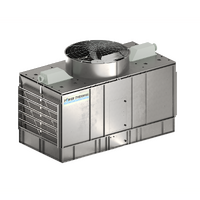
TXQF Short Crossflow
The TXQF Short Crossflow is a slimline configuration within the TXQF Quietflow® crossflow range, designed for sites where footprint constraints drive the selection but you still want the serviceability and low-noise benefits of a crossflow tower.
Where it fits
- Tight roof plant layouts, narrow service corridors, and constrained plant areas
- Commercial HVAC condenser water systems
- Medium-sized industrial process cooling duties
- Projects needing a practical balance of access, noise control, and reliability
Why TXQF Quietflow® in a slim form
TXQF Quietflow® towers are designed around a proven crossflow layout and are commonly selected for larger HVAC and medium-sized industrial markets. The TXQF format focuses that platform into a slimmer arrangement for difficult sites, without changing the fundamentals that make TXQF practical to own and maintain. :contentReference[oaicite:0]{index=0}
Key features
- Low-noise fan package: wide-profile, low-speed fibreglass fans are standard across TXQF models to support lower noise operation. :contentReference[oaicite:1]{index=1}
- Reduced splash noise: fill extending to the basin floor helps reduce splash-related noise. :contentReference[oaicite:2]{index=2}
- ImpactDeck® water diffuser: designed to deliver strong water distribution and performance across a range of flows. :contentReference[oaicite:3]{index=3}
- Built for industry: heavy-duty internal steel framing carries the structural load rather than the fibreglass panelling. :contentReference[oaicite:4]{index=4}
- Service access: removable hot-water basin covers allow gravity nozzles to be cleaned without shutting down the plant. :contentReference[oaicite:5]{index=5}
- Packaged/modular supply: TXQF offerings include factory-assembled modules and large basin volumes (site-dependent). :contentReference[oaicite:6]{index=6}
Options and configuration
TXQF Short Crossflow selections are configured around duty and site constraints. Typical options can include:
- Cell quantity and staging strategy to suit redundancy and part-load operation
- Materials and corrosion protection matched to environment and water quality
- Drift control selections aligned to site conditions and compliance needs
- Noise-focused fan/motor selections and control integration (VSD/BMS where required)
- Access and safety provisions aligned to inspection and cleaning requirements
What we need to size and select the right unit
- Water flow and hot/cold temperatures (or heat load in kW)
- Project location (design wet bulb) and operating profile
- Available footprint, height limits, and access/lifting constraints
- Noise limits and nearest receptors
- Water quality, filtration approach, and treatment regime
- Electrical supply and preferred control approach
TOTAL: 49 Products