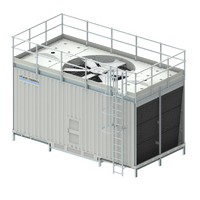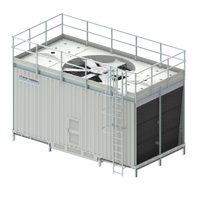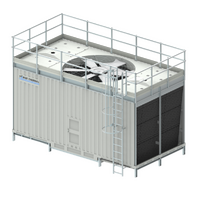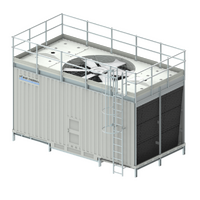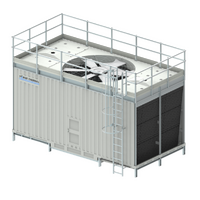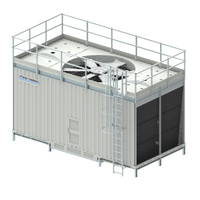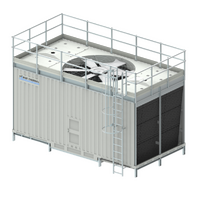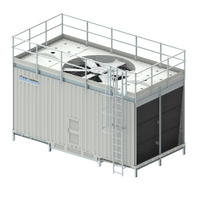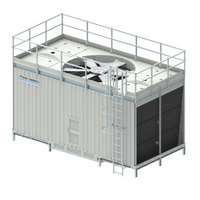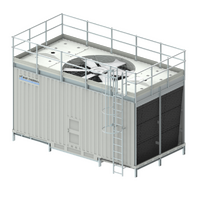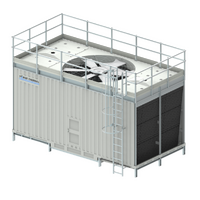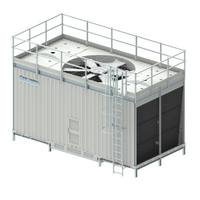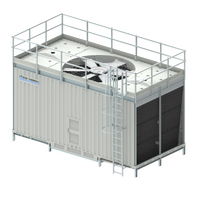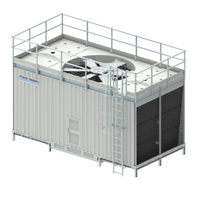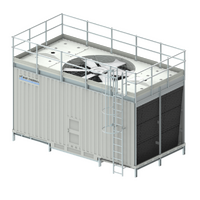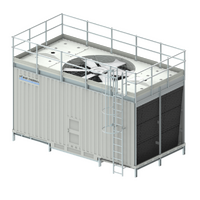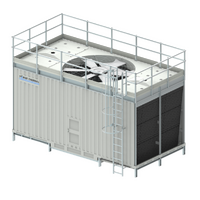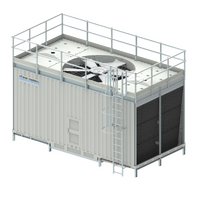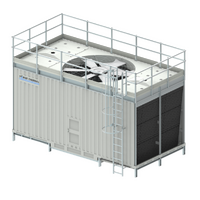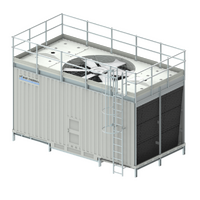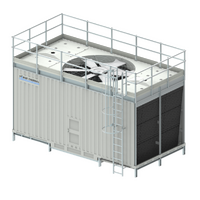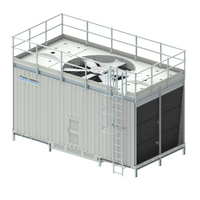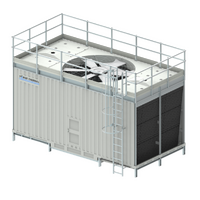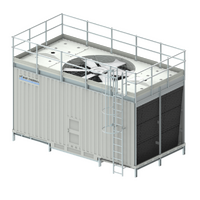
Crossflow Cooling Towers
Crossflow cooling towers move air horizontally across the falling water. This layout is widely used because it can simplify access to key internals and supports practical maintenance on many designs.
How a crossflow cooling tower works
Warm water enters a hot-water basin at the top of the tower and flows down through the fill. Air is drawn in through the sides and passes across the falling water. A small portion of the water evaporates, removing heat from the remaining water which then collects in the cold-water basin and returns to the process.
Why choose crossflow
- Maintenance access: crossflow designs commonly allow access to basin, fill, and drift components without dismantling major sections.
- Gravity water distribution: avoids pressure sprays and can reduce nozzle complexity on many models.
- Lower pump head potential: gravity distribution can reduce required pumping head in certain configurations.
- Noise control: design choices can reduce water noise and enable low-speed fan selections.
- Serviceability: easier inspection and cleaning can reduce downtime and improve lifecycle outcomes.
Tower Thermal crossflow solutions
Tower Thermal supplies crossflow cooling towers selected around your duty, footprint, noise limits, water quality, and operating profile. Options range from packaged crossflow towers to industrial, site-assembled models.
TXQF Quietflow® crossflow cooling towers
TXQF Quietflow® is a crossflow tower range used from large-building HVAC condenser water to industrial process cooling where waste heat removal is required. TXQ designs include features focused on service access, water distribution, and low-noise operation.
TXQi industrial crossflow cooling towers
TXQi models are large, industrial, site-assembled crossflow cooling towers commonly specified for higher duties and industrial maintenance expectations, including gearbox-driven fan arrangements.
What we need to size and quote
- Heat load (kW) or water flow plus hot and cold water temperatures
- Project location (design wet bulb) and operating profile
- Available footprint, height, and access/lifting constraints
- Noise constraints (nearest receptors and time-of-day limits)
- Water quality, filtration approach, and treatment regime
- Electrical supply details and control preference (VSD/staging/BMS integration)
Service and lifecycle support
Tower Thermal supports crossflow cooling towers with installation, refurbishment, parts, repairs, performance testing, inspections, and system audits to keep equipment reliable over its service life.